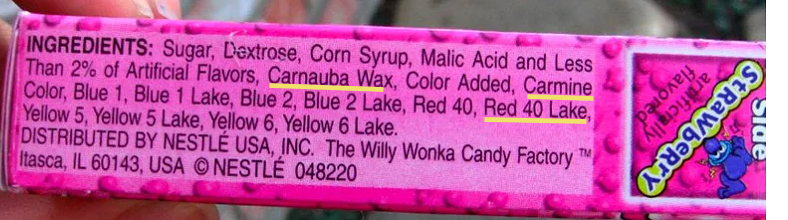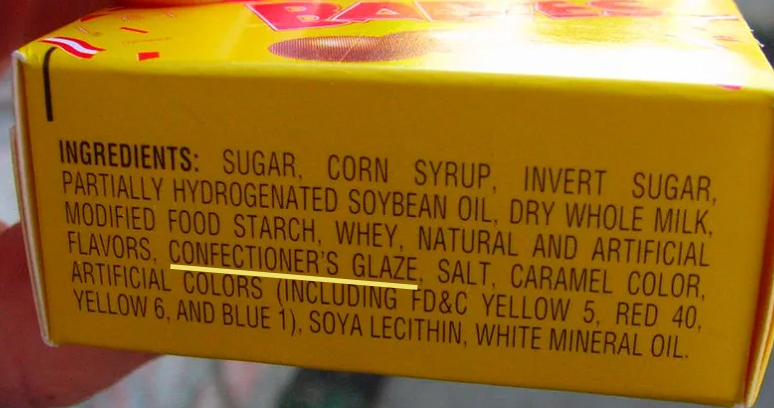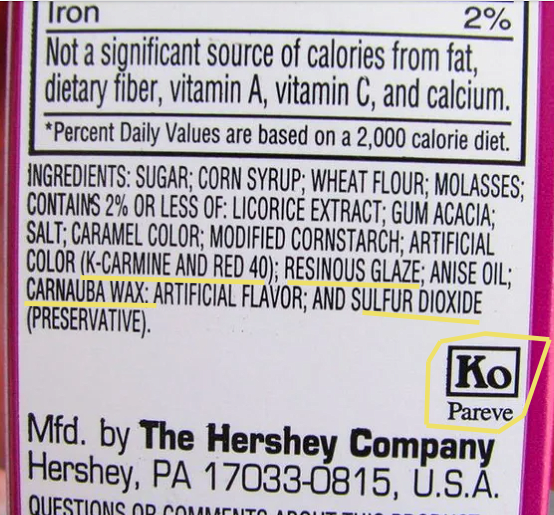
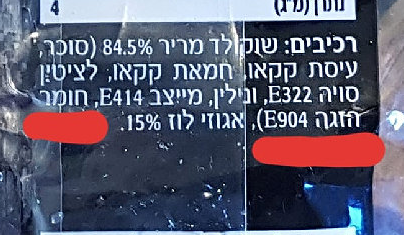
*** שימו לב***לתמונה למעלה
זה נקרא “שאלק” שזה חומר עשוי מחרקים E904
: הרכיבים שצריך להיזהר מהם באוכל
E120, E441, E542 , E904, E920, E921
אלו חומרי צבע. ועשויים מחרקים מרוסקים. צבע פופולרי זה משמש להענקת גוון אדום עמוק למיצי פירות, ג’לטינים, שמפו סוכריות ועוד. כאשר משתמשים בו כתוסף מזון, הצבע חייב להיות מסומן על גבי תוויות האריזה. לפעמים קרמין מסומן כ-E120
E153
מכינים מפחם מעצים שרופים או בעלי חיים שרופים. משמש במזון
E422 (Glycerol)
מגיע משומן מן החי והצומח. מיוצר באופן מסחרי סינטטי מנפט
E441 (Gelatine)
מיוצר מכל מיני בעלי חיים כולל חזירים
E120
זהו צבע אדום המתקבל מחיפושית הקוצ’ינאל
ידוע גם בשמות: קוצ’יניאל, חומצה קרמינית, וקרמין. E120 נותן צבע אדום למוצרים. עשוי מחיפושיות קוצ’יניל. משמש במוצרים, כגון משקאות, ביסקוויטים, ממתקים, קינוחים ורטבים. זה נעשה על ידי ריסוק החרק הקוצ’יניאל
E422 (Glycerol/Glycerine)
מופק משומנים מן החי או מן הצומח. משמש כממתיק וכחומר לחות במוצרי בשר, מסטיקים ושוקולד. גליצרול משמש גם בתרופות וקוסמטיקה
E542
מגיע מעצמות בעלי חיים של בקר או חזירים. משמש כחומר נגד התגבשות, מתחלב ומקור לזרחן בתוספי מזון. משמש גם במוצרי קוסמטיקה כגון: משחת שיניים, תוספי תזונה ובמזונות יבשים כחומר נגד התגבשות, למניעת היצמדות החלקיקים. נמצא גם במוצרים יבשים ובסוכר קנים
E631 (sodium inosinate)
מגיע מבשר, כמו חזירים, דגים, סרדינים. במקרים מסוימים ניתן לייצר אותו גם מסוכרי תסיסה חיידקיים
E904 (Shellac שאלק )
פולימר טבעי המופק ממינים מסוימים של כינים מהודו. מגיע מהנקבה של חרק בשם ה-“לאק”. אלו חרקים מרוסקים. הוא משמש כציפוי המצוי במוצרים כמו ממתקים, פירות וכל מיני סוגי ממתקים. הם משתמשים בו לציפוי ממתקים ולגרום להם להיראות מבריקות
למשל שאלק זה גם נקרא “זיגוג קונדיטור” וזה מאה אחוז בערך חרקים מרוסקים אבל הם כותבים על האריזה: זיגוג קונדיטור אבל זה בעצם שאלק חרקים
E913 (Lanolin)
שעווה טבעית המופקת מצמר כבשים. משמש בעיקר במוצרי קוסמטיקה וקצת מסטיקים. הם לא שמים את המילה לנולין כמרכיב במסטיק אפילו שהיא קיימת שם כמו במסטיק
E901 (Glazing Agent)
עשוי משעוות דבורים. ג’לטין – חלבון המתקבל על ידי הרתחת עור של בעלי חיים, רקמת חיבור או עצמות, לרוב מפרות או חזירים. נמצא בנרות, ג’לי לאפיה, מסטיקים ומוצרי קוסמטיקה, כגון מוצרי שפתיים וקרמים לידיים
E920 / E921 (L-cysteine hydrochloride)
(L-cysteine hydrochloride monohydrate)
מופק מחלבונים, כולל חלבון מן החי ושיער. מתקבל ממקורות מן החי, כולל בשר חזיר. זה משפר לחם
E1105
עשוי מחלבוני ביצת תרנגולת
Maggots and Mite
רימות וקרדית
הפ.ד.אי מתיר באופן חוקי לפטריות להכיל 19 רימות
Organic cricket flour
קמח קריקט (צרצר) אורגני
מגיע מצרצרים ומשמש בכל מיני מזון כמו לחם
Cockroaches
ג’וקים
שמים בשוקולד ומוצרי מזון אחרים
Isinglass
חומר דמוי-ג’לטין זה מופק משלפוחית דגים. הוא משמש לעתים קרובות להכנת בירה או יין ומשמש במשקאות קלים
Natural flavorings
חומרי טעם וריח טבעיים
תמיד כתוב על המוצר “חומרי טעם וריח טבעיים” אבל לא אומרים מה בדיוק. חלק מהמרכיבים הללו הם על בסיס בעלי חיים. דוגמה אחת היא castoreum, טעם מזון שמגיע מהפרשות של בלוטות הריח של בונים
ויטמין D3 Vitamin D3
רוב ויטמין די 3 מופק משמן דגים או מלנולין המצוי בצמר כבשים. ויטמין די 2 ו- די 3 מחזזית הם חלופות טבעוניות
lichen
Chitin / Chitosan / Chitinases
כיטין הוא סיב הנרכש משלדים חיצוניים של לובסטרים, סרטנים ושרימפס, והוא נפוץ ביין. הוא נגזר מהשלדים החיצוניים של סרטנים, חרקים ודפנות התא של פטריות. משמש להארכת חיי המדף ולהגן מפני קלקול מזון והרעלה
L-Cysteine ל-ציסטאין
ל-ציסטאין היא חומצת אמינו המשמשת להארכת חיי המדף של מוצרי מזון מסחריים כמו לחם. ל-ציסטאין יכול להיות מופק ממקורות בעלי חיים ואפילו אנושיים כגון נוצות אווז וברווז, שיער אדם, זיפי חזירים ופרסות
Gelatin ג’לטין
ג’לטין הוא אחד מתוספי המזון הידועים יותר המיוצרים מקולגן של בעלי חיים על ידי הרתחת העור, הגידים, הרצועות או העצמות. מרכיב מזון חסר צבע וטעם זה משמש כמייצב ומסמיך במזונות כגון ממתקים, ג’לי, עוגות, יוגורט, גבינה ותוספי מזון
Carmine / Cochineal / Carminic Acid
קרמין הוא שמו של צבע מאכל אדום שעשוי מחרק הקוצ’ינאיל. הוא משמש במגוון מוצרים יומיומיים כולל רטבים, חלב בטעמים, ממתקים, עוגות, מטבלים, קינוחים, גלידה, יוגורט, ועוד
Bone Char עצם פח
עצם פח הידוע גם בשם עצמות פחם או “פחמן טבעי” הוא בעצם רק עצמות בעלי חיים חרוכים. העצמות מקורן בדרך כלל מצאן ובקר
פוספט עצמות Bone Phosphate
פוספט עצמות הוא תוסף העשוי מעצמות בעלי חיים – בדרך כלל עצמות של חזירים ובקר
In English
Ingredients to avoid in food –
E120, E441, E542 , E904, E920, E921
These are colorants. And are made from crushed insects. This popular colorant is used to impart a deep red shade to fruit juices, gelatins, candies shampoos and more. When used as a food additive, the dye must be labelled on packaging labels. Sometimes carmine is labeled as E120.
E153
Prepared from charcoal from burned wood or burned animals. Used in food.
E422 (Glycerol)
Comes from animal and vegetable fat. Commercially made synthetically from petroleum.
E441 (Gelatin)
Produced from all species of animals including pigs.
E120
This is a red colouring obtained from the cochineal beetle.
Also known as cochineal, carminic acid and carmines. E120 gives a red colour to products. Made from cochineal beetles. Used in in products, such as drinks, biscuits, sweets, desserts and sauces. It is made by crushing the cochineal insect.
E422 (Glycerol/Glycerine)
Derived from animal or vegetable fats. Used as a sweetener and humectant in meat products, chewing gum, and chocolate. Glycerine is also used in pharmaceuticals and cosmetics.
E542
Comes from animal bones of cattle or pigs. Used as an anti-caking agent, emulsifier and source of phosphorous in food supplements. Also used in cosmetics such as: tooth paste, nutritional supplements and in dry foods as an anti-caking agent, to prevent the particles sticking together. Also found in dry products and cane sugar.
E631 (sodium inosinate)
Comes from meat, such as pigs, fish, sardines. In some cases it can also be produced from bacterially fermenting sugars.
E904 (Shellac)
Natural polymer derived from certain species of lice from India. Comes from the female lac bug. It is crushed bugs. It is used as a coating found in products like confectionary, fruits and candy. They use it to coat candy and make it look shiny. Also called Confectioner’s Glaze!
E913 (Lanolin)
A naturally-occurring wax extracted from sheep’s wool. Mainly used in cosmetics and some chewing gum. They don’t put the word Lanolin as an ingredient in chewing gum but it is there.
E901 (Glazing Agent)
Made from beeswax. Gelatin – Protein obtained by boiling animal skin, connective tissue or bones, usually from cows or pigs. Found in candles, jellies, chewing gum and cosmetics, such as lip products and hand creams.
E920 / E921 (L-cysteine hydrochloride)
Derived from proteins, including animal protein and hair. It is a bread enhancer .
(L-cysteine hydrochloride monohydrate)
Derived from proteins, including animal protein and hair. Obtained from animal sources, including pork. It is a bread enhancer.
E1105
Made from hen’s egg whites.
Maggots and Mite
The FDA legally allows mushrooms to contain 19 maggots
Organic cricket flour
Comes from crickets and used in all sorts of food like bread.
Cockroaches
Used in chocolate and other food products.
Isinglass
This gelatin-like substance is derived from fish bladders. It’s often used in the making of beer or wine and used in soft drinks.
“Natural flavorings“
Some of these ingredients are animal-based. One example is castoreum, a food flavoring that comes from the secretions of beavers’ anal scent glands.
Vitamin D3
Most vitamin D3 is derived from fish oil or the lanolin found in sheep’s wool. Vitamin D2 and D3 from lichen are vegan alternatives.
Chitin / Chitosan / Chitinases
Chitin is a fibre procured from the exoskeletons of lobsters, crabs and shrimp, and is commonly used in wine. It is derived from the exoskeletons of crustaceans, insects, and the cell walls of fungi. Uused to extend shelf life and protect against food spoilage and poisoning.
L-Cysteine
L-Cysteine is an amino acid used to prolong the shelf-life of commercial food products like bread. L-Cysteine can be derived from animal and even human sources such as goose and duck feathers, human hair, swine bristles, and hooves.
Gelatin
Gelatin is one of the more commonly known food additives made from the collagen of animals by boiling the skin, tendons, ligaments or bones. This colourless and flavourless food ingredient is used as a stabilizer and thickener in foods such as confectionary, jelly, cakes, yoghurt, cheese and supplements.
Carmine / Cochineal / Carminic Acid
Carmine is the name of a red food colouring that is made from Cochineal bugs. It is used in a variety of everyday products including sauces, flavoured milk, confectionary, cake, dip, desserts, ice cream and yogurt
Bone Char
Bone Char otherwise known as charcoal bones or “natural carbon” is essentially just ground up, charred animal bones. The bones are typically sourced from sheep and cattle.
Bone Phosphate
Bone Phosphate is an additive made from animal bones – typically the bones of pigs and cattle.